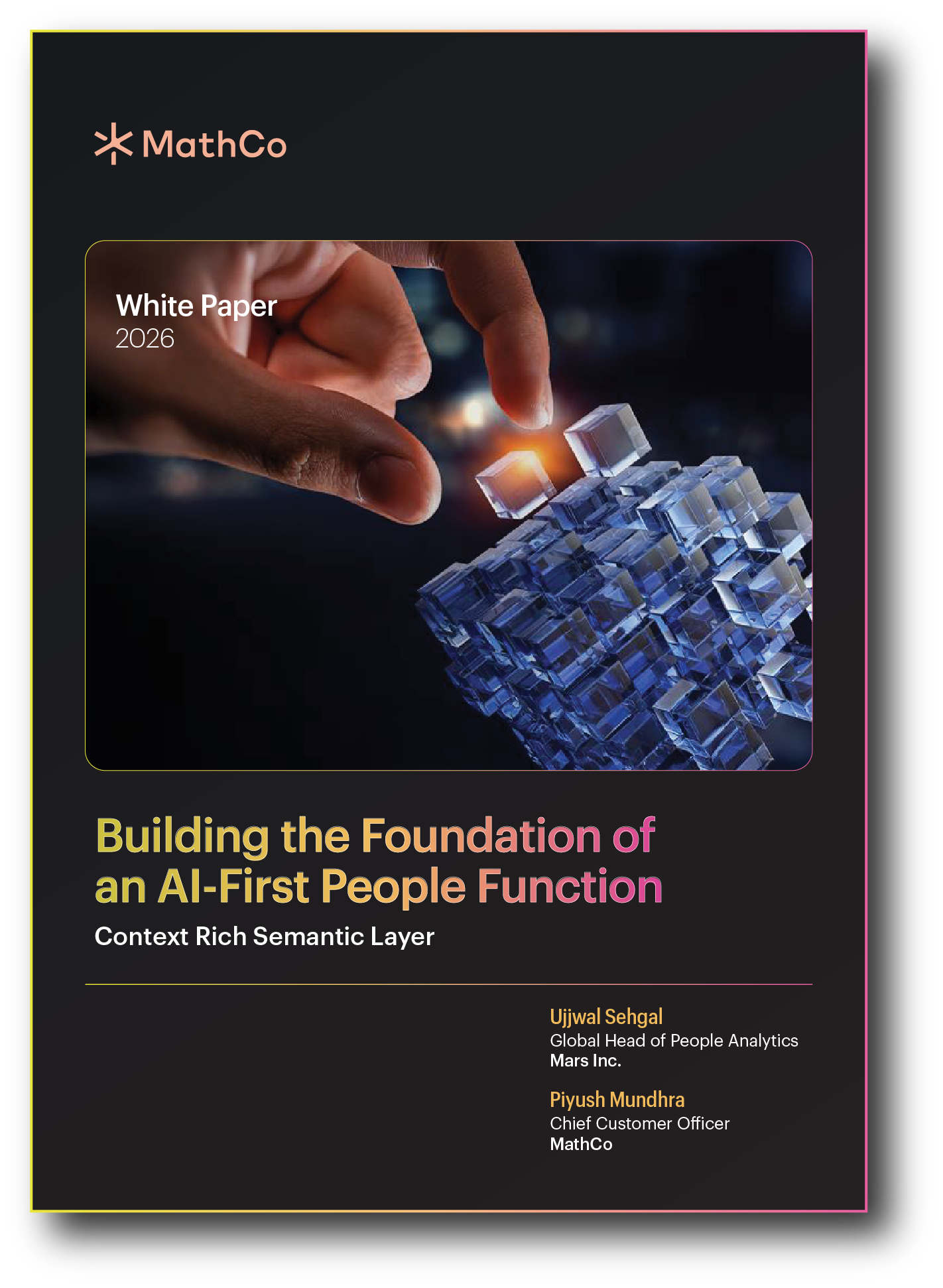
As organizations evolve toward AI-first ways of working, People Functions face one of their biggest challenges: fragmented data and inconsistent definitions of key metrics.


“Every organization has a very unique definition to a particular metric, fragmented data systems and sources leading to inconsistent and slow decision making.”

– Ujjwal Sehgal, Global Head of People Analytics, Mars Inc.

Ujjwal
Ujjwal

As organizations evolve toward AI-first ways of working, People Functions face one of their biggest challenges: fragmented data and inconsistent definitions of key metrics.


“Every organization has a very unique definition to a particular metric, fragmented data systems and sources leading to inconsistent and slow decision making.”

– Ujjwal Sehgal, Global Head of People Analytics, Mars Inc.

Piyush

To unlock trusted, contextual, and scalable decision-making with systemic AI, organizations must establish a semantic layer, a unified foundation that connects data, context, and intelligence.


“Unlike platforms or models you can borrow, the semantic layer reflects your organization’s unique intelligence — it’s the one thing that’s truly yours”

– Piyush Mundhra, Chief Customer Officer, MathCo
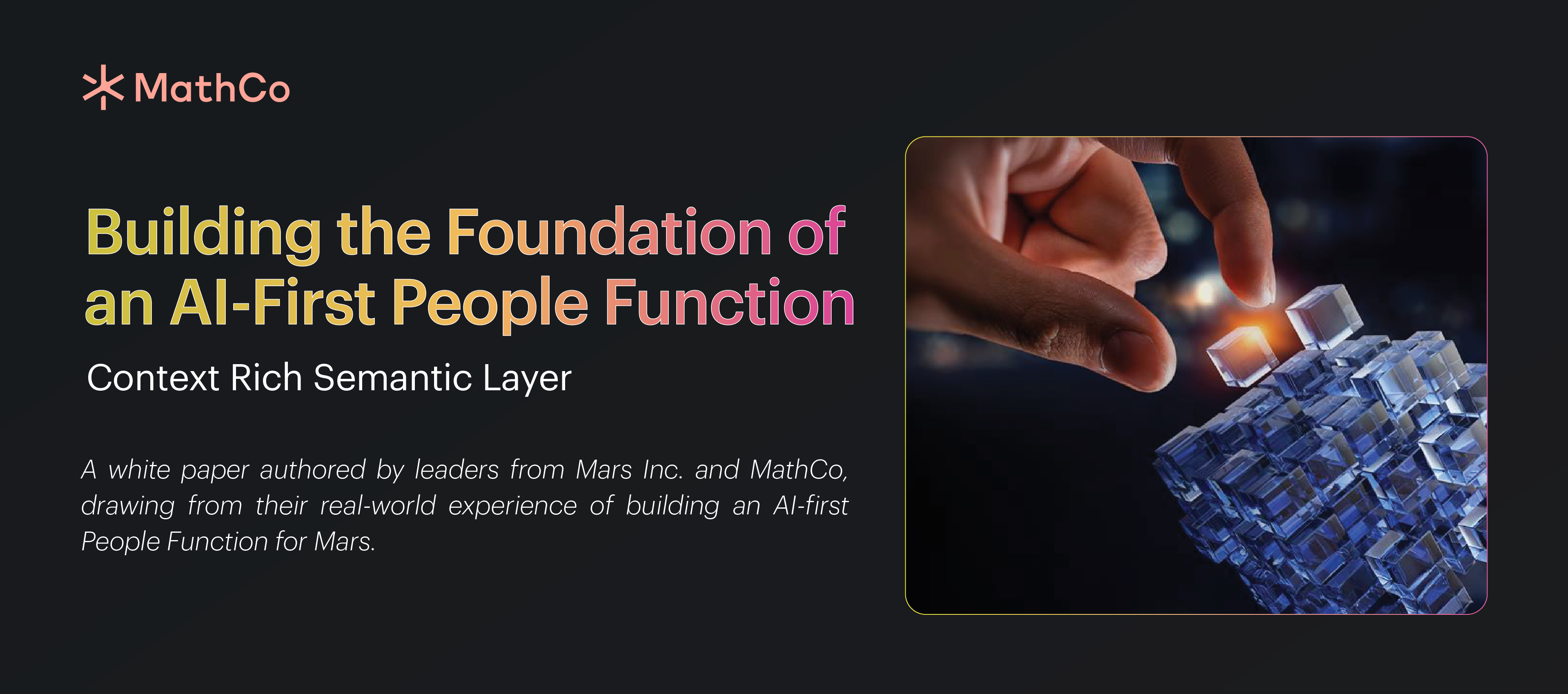
Piyush

To unlock trusted, contextual, and scalable decision-making with systemic AI, organizations must establish a semantic layer, a unified foundation that connects data, context, and intelligence.


“Unlike platforms or models you can borrow, the semantic layer reflects your organization’s unique intelligence — it’s the one thing that’s truly yours”

– Piyush Mundhra, Chief Customer Officer, MathCo 

Line 1

What You'll Learn

Line 2
Icon 1

Why Context Matters

and how it defines the success

of your AI initiatives

Icon 2

Architecture of

the Semantic Layer

in a People Function

Icon 3

How to Build It Right

aligning technical foundations

with adoption goals

Line 1

Download the White Paper

Line 2
Semantic Layer White Paper